




Eclipse Toolkit - GLOBE Observer



Citizen scientists contributed over 80,000 air temperature measurements and nearly 20,000 clouds observations during the 2017 solar eclipse across North America, as well as hundreds of additional observations during the 2019 and 2020 eclipses in South America. The Eclipse tool will next be active in the GLOBE Observer app for the annular eclipse in October 2023. In the meantime, you can analyze eclipse data with your participants or start preparing for an upcoming solar eclipse.
Analyze Eclipse Data
Did your museum or library host a big event for the 2017 eclipse? Invite your participants back to take a look at the observations collected by citizen scientists. Learn more about accessing and analyzing eclipse data.
Upcoming Eclipses
14 October 2023 - Annular Eclipse across North, Central and South America
8 April 2024 - Total Solar Eclipse across North America
For more information about how to take observations, visit the GLOBE Eclipse landing page.
Eclipse Facilitator Resources
For more resources geared toward individual observers, visit the Eclipse Resource Library (incluyendo recursos sobre eclipses en español).
Exploring the Solar System: Solar Eclipse
"Exploring the Solar System: Solar Eclipse" is a hands-on activity demonstrating how the particular alignment of the Sun, Earth, and Moon can cause an eclipse. Visitors investigate the positions of these objects to create shadows and learn about solar eclipses. This activity was designed specifically in advance of the total solar eclipse that will traverse the continental United States in August, 2017, but can be used anytime. Las actividades también están disponibles en español.
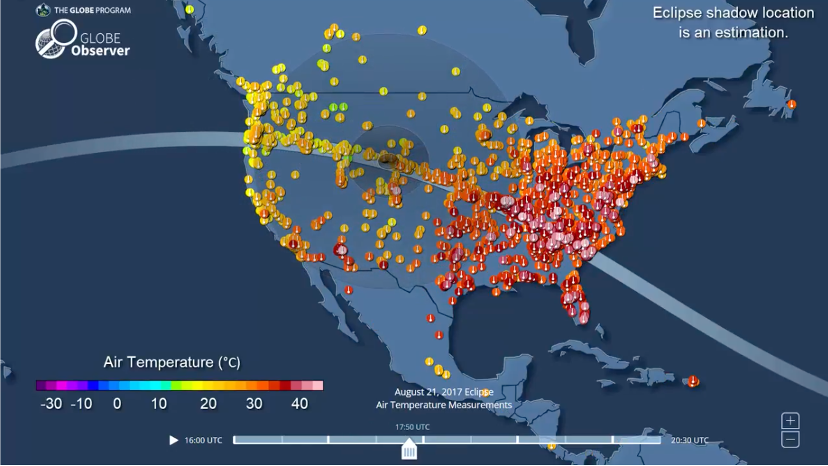
GLOBE Air Temperature with Eclipse Shadow 2017
[00:42] A quick visualization of the over 80,000 measurements we collected through the Eclipse tool in the GLOBE Observer app on August 21st, 2017, with an estimation of the location of the eclipse shadow throughout the day added.
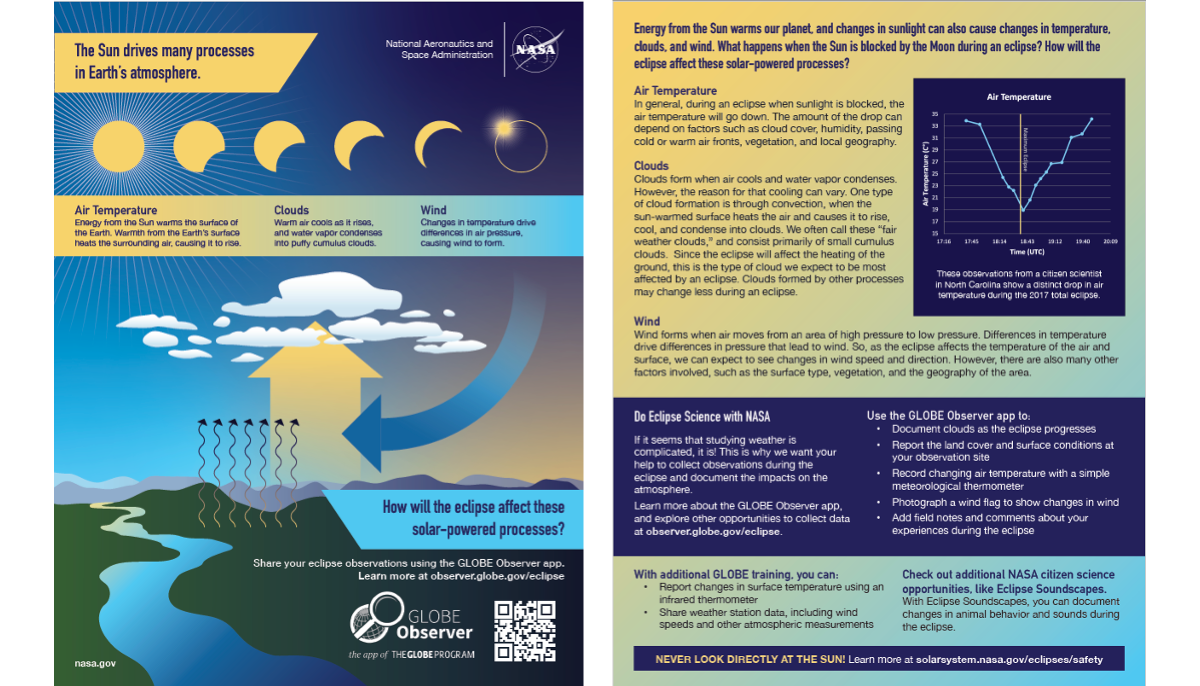
GLOBE Eclipse Atmosphere One-Pager
Energy from the Sun warms our planet, and changes in sunlight can also cause changes in temperature, clouds, and wind. What happens when the Sun is blocked by the Moon during an eclipse? How will the eclipse affect these solar-powered processes? This one-pager describes some the changes in the atmosphere you might observe during eclipses, and ways you can collect data during the events.
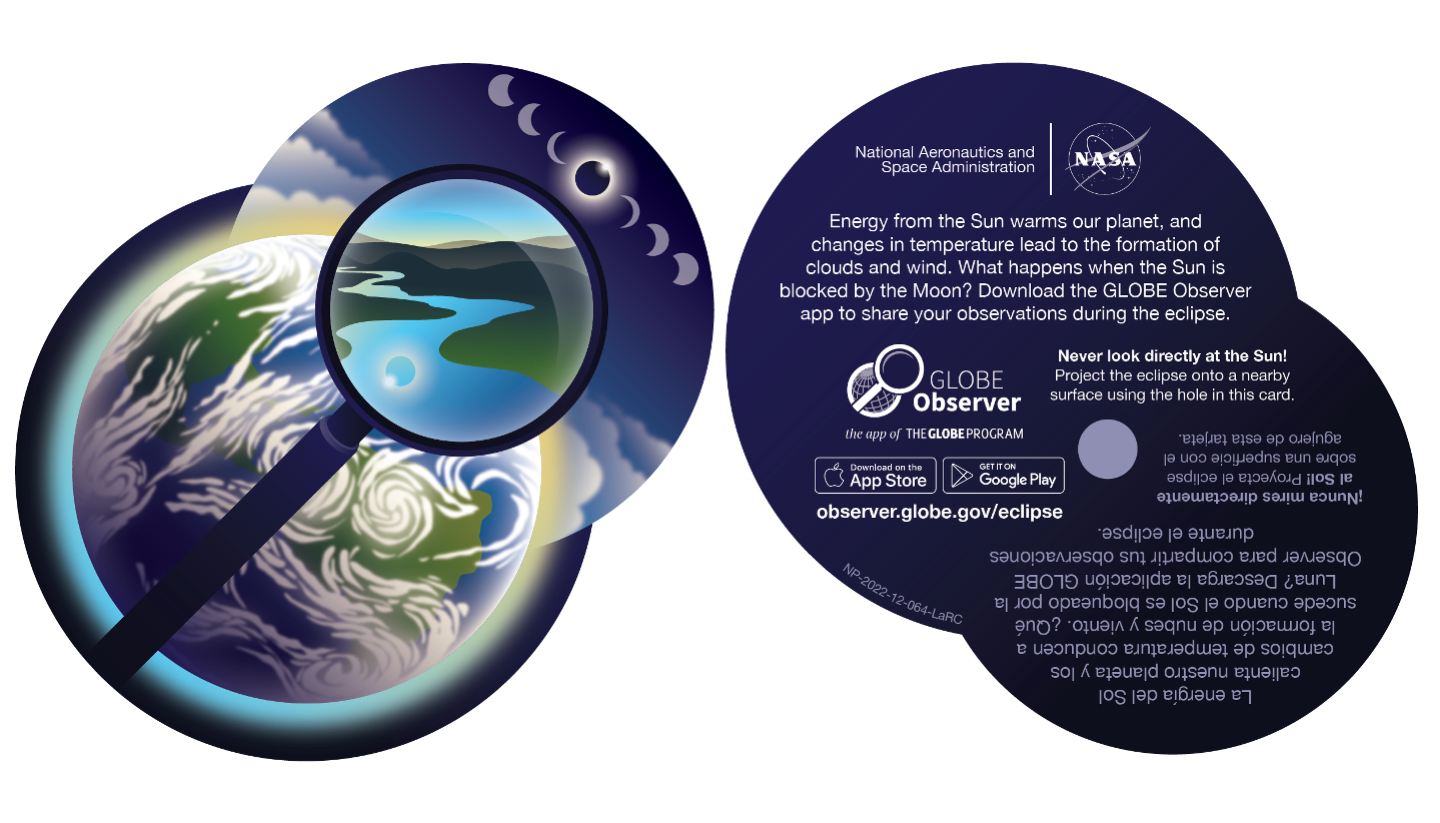
GLOBE Eclipse Pinhole Postcard
Dual-language (English and Spanish) postcard about observing the eclipse with GLOBE Observer, with a space in the middle that can be punched out to use as a pinhole projector. The text reads: "Energy from the Sun warms our planet, and changes in temperature lead to the formation of clouds and wind. What happens when the Sun is blocked by the Moon? Download the GLOBE Observer app to share your observations during the eclipse. Never look directly at the Sun! Project the eclipse onto a nearby surface using the hole in this card."
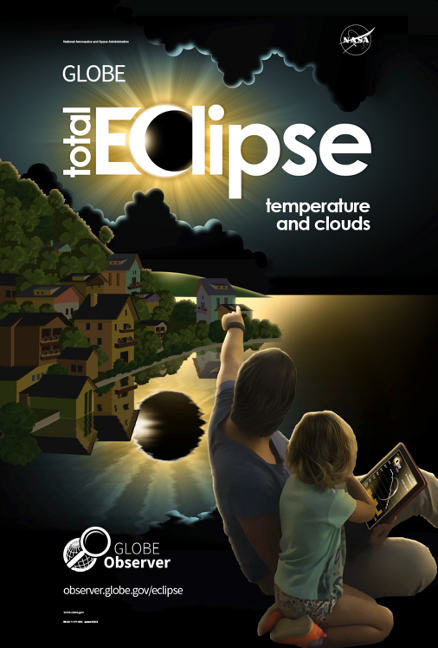
A poster, originally created for the 2017 eclipse, highlighting the GLOBE Eclipse tool and citizen science observations.
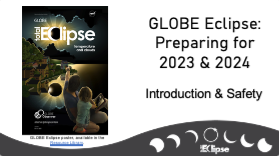
GLOBE Eclipse Presentation: Introduction, Safety & App Basics
A presentation giving an introduction to GLOBE Eclipse: the Earth science angle on eclipses and why to study them with citizen science observations, eclipse viewing safety tips, how to use the GLOBE Eclipse tool in the app, and some supplemental observing tips.
PPTX file with embedded videos (43 MB)
My NASA Data Eclipse Phenomenon Page
The My NASA Data Solar Eclipse page features, mini-lessons, interactives and lesson plans for grades 3-12, including explorations of why eclipses occur, the differences between solar and lunar eclipses, how to observe the corona and make predictions about it's appearance during upcoming eclipses, and more.
NASA HEAT Eclipse Training Slides
Eclipse training slides produced by the NASA Heliophysics Education Activation Team (HEAT). Topics of the slides include the science of eclipse, eclipse viewing safety, and suggestions for engaging the public in eclipse activities. These slides are focused on the annular eclipse of 14 October 2023 - a new set will be released for the total eclipse in April 2024.
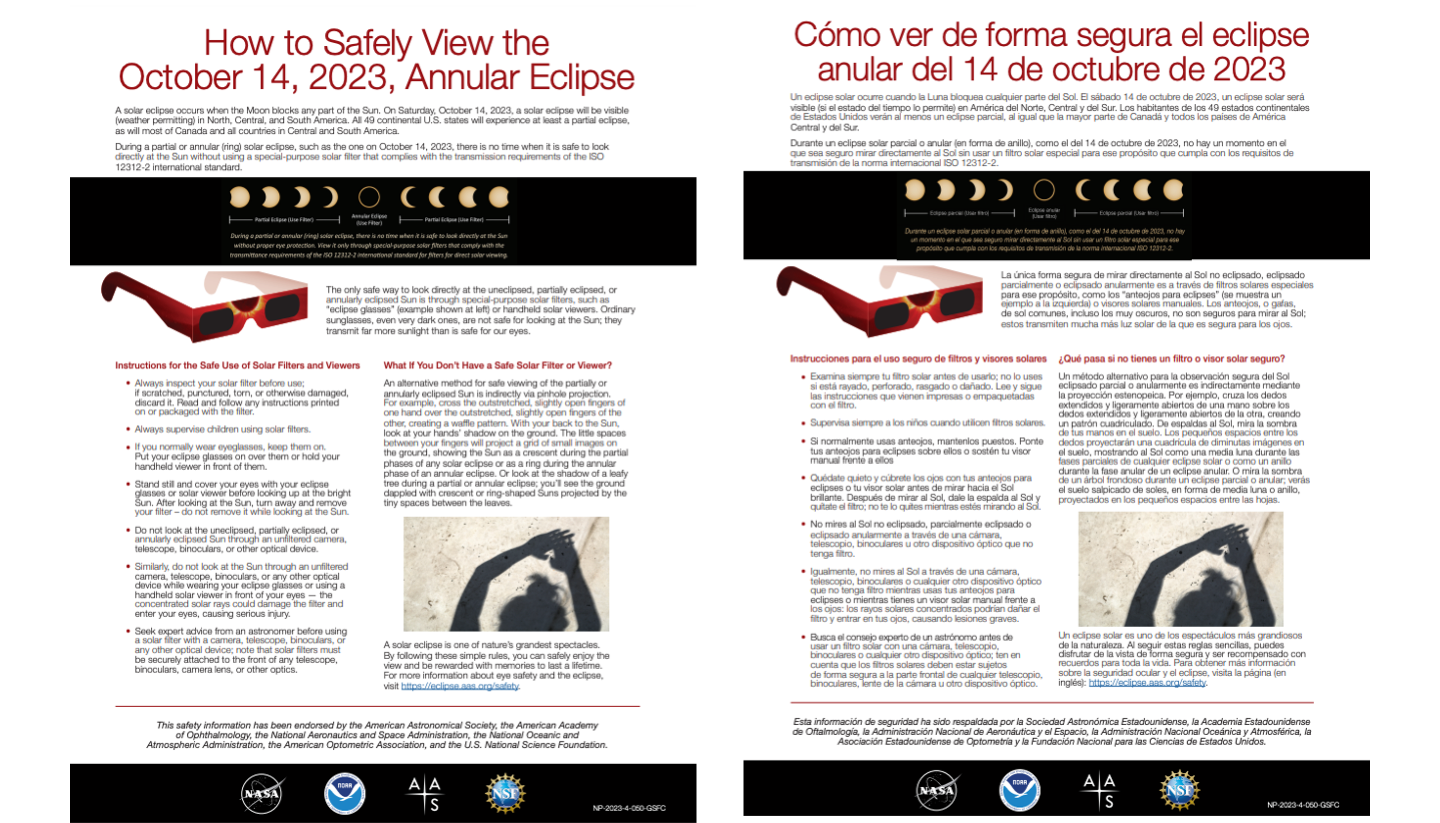
This educational flyer, created by NASA in collaboration with the American Astronomical Society (AAS), provides important information about the upcoming annular solar eclipse on October 14, 2023. The bilingual flyer in English on one side and Spanish on the other is designed to reach a wider audience. It aims to educate and guide individuals on how to safely observe this celestial event.
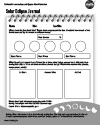
Use this journal page to record what you see during the solar eclipse, both how much of the Sun is covered by the Moon at different times, as well as observations of the environment around you (animal behavior, weather, etc.) during different periods of the eclipse. NOTE: It is never safe to look directly at the Sun without eye protection. The only safe way to look at the Sun is through special-purpose solar filters such as “eclipse glasses” or hand-held solar viewers.
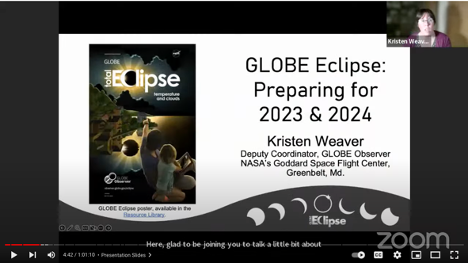
Webinar about GLOBE Eclipse for Night Sky Network
[01:01:10] Webinar given for the Night Sky Network/Eclipse Ambassadors by Kristen Weaver, deputy coordinator for GLOBE Observer project, sharing how to use the Eclipse tool with audiences.
Books

Use WorldCat to search libraries near you, read reviews, and find editions in different languages.
Books for Kids: Eclipse books, Clouds books
Books for Teens and Adults: Eclipse books, Clouds books

Learn more about the upcoming annular eclipse on the NASA Eclipse page.